FLOP Network vs Flux : lettre ouverte à Arthur Hayes sur la Proof of Useful Inference
Le FLOP Network d'Arthur Hayes (Flop Labs) vient d'ouvrir son testnet. Comparaison avec Flux (RunOnFlux) : similitudes, différences, leçons de FluxEdge, et pourquoi les deux équipes devraient se parler. (Article en anglais)
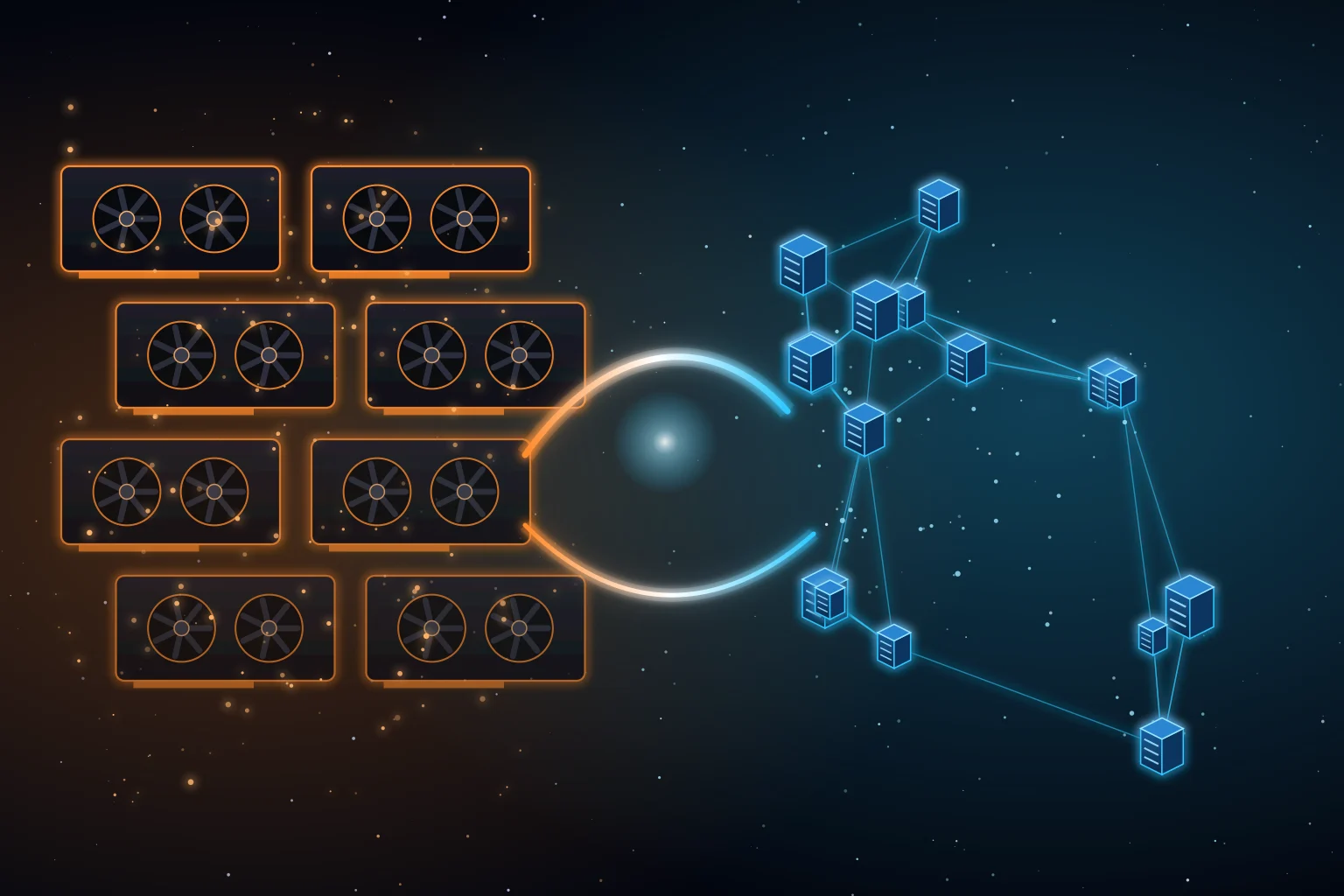
Hey Arthur Hayes, Meet Flux: FLOP Network vs RunOnFlux
An open letter, and an honest comparison, from a Flux node operator to the BitMEX co-founder who just came out of retirement to build FLOP.
Status on November 26, 2026: FLOP Network is in public testnet (since November 24), mainnet targeted for Q1 2027. Flux has been running in production since 2018; its GPU marketplace FluxEdge was shut down on November 4, 2026 after a security incident, while FluxCloud and the FluxNodes keep running. This article is updated at each milestone.
Dear Arthur, congratulations. Three days ago, the FLOP Network public testnet opened to anyone with a GPU, a wallet or an AI agent, with no waitlist. Today, the first model, Qwen3-8B, passed registration and verification on-chain. For a project that was an essay in August, that is fast.
We are writing because what you are building looks a lot like something a community of independent operators has been doing, in a different way, since 2018: Flux, also known as RunOnFlux. Same instinct (stop wasting computation, pay people for useful work), same allergy to venture-capital premines, overlapping vocabulary ("Proof of Useful Work" vs "Proof of Useful Inference"), and yet very different choices. We think both projects would gain from talking. Here is why, with the facts on the table.
Part 1: What Is FLOP Network? (Arthur Hayes, Flop Labs)
On August 18, 2026, Arthur Hayes, co-founder of BitMEX and CIO of the Maelstrom family office, announced he was leaving retirement to lead Flop Labs. The pitch fits in five words: FLOP is "food for your AI agent". Autonomous agents need compute the way people need food; FLOP is meant to be the currency that converts directly into it. Hayes promised no presale and no venture allocation, calling it a 100% fair launch.
How FLOP works: Proof of Useful Inference
FLOP is a proof-of-inference blockchain. Instead of hashing, miners earn rewards by running AI models for paying agents and proving they did it. The yellow paper describes it as a verified-inference settlement layer built on Substrate. Four roles interact:
- 1
AI agents (the customers)
An agent posts a session request naming a model-weight hash, a maximum latency, the compute needed (in FLOPs), a confidentiality setting and a fee, and pays in FLOP. Agents need a decentralized identifier (DID) and a wallet.
- 2
Miners (the GPUs)
Miners stake FLOP, accept matching sessions, run the model and submit a proof. They earn 85% of the session fee plus 75% of the block reward, split by verified compute. Cheating or failing an accepted session gets slashed.
- 3
Validators (no GPU required)
Validators build blocks containing the hashes of inference proofs, settle payments and govern through FLOP Improvement Proposals (two-thirds majority). The set is capped at 1,000 seats of 1.2 million self-staked FLOP each.
- 4
Stakers
Holders who run no infrastructure can delegate to miners or validators for a share of rewards.
Verification is the hard part of any "useful work" chain, and FLOP stacks three tools: TOPLOC activation fingerprints, randomized re-execution, and optional trusted execution (a "HARD" tier using NVIDIA Confidential Computing on TDX or SEV-SNP hosts). The default "SOFT" tier runs on ordinary GPUs. We explain why this is so difficult in our companion piece Proof of Useful Inference vs Proof of Useful Work.
FLOP tokenomics
| Parameter | FLOP Network (testnet specs, Nov 2026) |
|---|---|
| Block time | ~1 second, deterministic finality |
| Block reward | 96 FLOP, halving every 730 days, floor of 3 FLOP after five halvings (perpetual tail emission) |
| Reward split | Miners 75% · Validators 10% · Agents 10% · Stakers 5% |
| Initial distribution | 4.4 billion FLOP, 24.3% of the ~18.1 billion supply reached in year 10 |
| Testnet airdrop cap | 3.6 billion FLOP: 1.2 billion each for miners, validators and agents |
| Ecosystem reserve | 800 million FLOP |
| Token sale / investors | None announced |
| Validator seat | 1.2 million FLOP self-staked, 1,000 seats max |
The numbers moved during the year: the September technical paper reported a genesis supply of about 2.48 billion FLOP, the November testnet announcement 4.4 billion. Treat every figure as a draft until mainnet.
Timeline
| Date (2026) | Milestone |
|---|---|
| August 18 | Hayes announces Flop Labs and the FLOP token |
| September 7 | Technical paper published |
| September 24 | Yellow paper 0.5.0 (draft) |
| October 27 | "The Trifecta" essay: FLOP as the benchmark price of compute, with derivatives on top |
| November 3 | Devnet open to builders |
| November 8–9 | A developer completes 12 testnet sessions on a single RTX 5080, 0 failures |
| November 24 | Public testnet and airdrop campaign start (about 90 days max, one snapshot) |
| November 26 | Qwen3-8B registered and verified; SDK 0.12.0, CLI 0.9.0, Python SDK 0.4.0 |
| Q1 2027 | Mainnet target |
The bigger bet: a spot price for compute
What makes FLOP more than another GPU network is the trader behind it. In "The Trifecta", Hayes proposes measuring the compute delivered by each inference session and deriving a spot price of compute in FLOP from on-chain transactions. If agents really use FLOP to pay for inference, that exchange rate could become a global benchmark, and a benchmark is what you need to build futures and forwards. His macro thesis runs in parallel: the AI data-center boom is debt-financed, it will overbuild, and the resulting glut of cheap GPUs (he points to late 2027 or 2028) will feed an economy of agents. FLOP is positioned to catch that glut.
Part 2: What Is Flux (RunOnFlux)?
Flux started in 2018 as Zel, later renamed Flux, developed by InFlux Technologies, whose co-founder and CEO is Daniel Keller. Its goal never changed: a decentralized alternative to AWS, run by thousands of independent operators. It fair-launched, it has no foundation-controlled data centers, and it has been producing blocks for eight years.
Flux in numbers (November 2026)
| Metric | Value |
|---|---|
| FluxNodes | 6,912 (Cumulus 3,391 · Nimbus 1,699 · Stratus 1,822) |
| Applications in the registry | 2,298 (+20% in one month) |
| Private (encrypted) deployments | 58% of applications |
| Game servers | 1,219 |
| Personal AI agents | More than 200 (OpenClaw 179, Hermes 31) |
| Block time | 30 seconds |
| Max supply | 560 million FLUX, emissions reduced 10% per year |
Every application deployed on FluxCloud is scheduled on several nodes at once, so one machine going down does not take the app with it. ArcaneOS, the node operating system released in 2025, encrypts the disk space given to containers and is the condition for Progressive Node Rewards, announced but not live yet (activation planned around block 3,787,502, about 1 July 2027): 80% of FluxCloud application revenue would be shared among ArcaneOS operators, 20% going to the nodes actually hosting the apps.
Proof of Useful Work v2: Flux took GPUs out of consensus
Here is the detail that surprises most people. In October 2025, Flux soft-forked to Proof of Useful Work v2 and removed GPU mining. Block production and transaction validation moved to the FluxNodes (Cumulus, Nimbus, Stratus), block time fell from 2 minutes to 30 seconds, mining pools disappeared and rewards became predictable: 14 FLUX per block, 9 to a Stratus, 3.5 to a Nimbus and 1 to a Cumulus. Since block 3,071,200 (late October 2026) the block reward is 12.6 FLUX. The "useful work" is hosting real applications; the security comes from the collateral locked in nodes. Our full analysis: Flux Abandons GPU Mining: The PoUW v2 Fork.
FluxEdge (2024–2026): the GPU marketplace, and how it ended
Flux did try the exact idea Hayes is now promoting. FluxEdge opened in closed alpha on March 29, 2024 and to the public on June 26, 2024: a peer-to-peer marketplace where anyone could rent out idle NVIDIA GPUs for AI, machine learning and rendering. The FluxCore desktop agent let a miner switch between mining and renting the card. In other words: machines that are not mining do AI instead, two and a half years before FLOP.
It is also over. After a security incident on November 4, 2026, Flux shut down FluxEdge and the FluxCore agent. Providers were asked to uninstall the agent, ideally reinstall their operating system, reset GPU clocks and rotate any key or wallet the agent could reach. FluxCloud, FluxOS, the FluxNodes and the blockchain were not affected, and FluxOS shipped security updates on November 6 and 9.
We say this plainly because it is the most useful lesson Flux can offer FLOP: software that third parties install on their own GPU machines is a huge attack surface. FLOP miners will run exactly that kind of software at home. Flux paid for that lesson.
Part 3: The Similarities Between FLOP and Flux
- •Useful work instead of wasted hashing. Both reject Bitcoin-style puzzles. Flux calls it Proof of Useful Work, FLOP calls it Proof of Useful Inference.
- •Idle hardware as a resource. Flux built FluxEdge on underused GPUs in 2024; FLOP builds its miner base on the same premise, from gaming cards to H100s.
- •Fair launch. Neither relies on a venture-capital premine. Flux fair-launched in 2018; FLOP distributes its initial supply through testnet airdrops.
- •AI agents as users. Flux already hosts more than 200 personal AI agents; FLOP is designed around agents as paying customers.
- •Permissionless participation. Anyone can run a FluxNode with the required collateral; anyone can join the FLOP testnet without approval.
- •A token that pays for compute. FLUX pays for FluxCloud deployments; FLOP pays for inference sessions.
Part 4: The Differences
| FLOP Network | Flux (RunOnFlux) | |
|---|---|---|
| Status | Public testnet (Nov 2026), mainnet Q1 2027 | Mainnet since 2018 |
| What is "useful work" | Running AI inference for agents | Hosting containerized applications |
| Who secures the chain | GPU miners + 1,000 staked validators | Collateralized FluxNodes (6,912) |
| GPUs in consensus | Central | Removed in October 2025 |
| Main customer | Autonomous AI agents | Developers, businesses, gamers, agents |
| Product | Inference sessions priced in FLOP | General-purpose decentralized cloud (FluxCloud) |
| Verification | TOPLOC fingerprints, re-execution, optional TEE | Node benchmarks, uptime checks, redundant deployment |
| Block time | ~1 second | 30 seconds |
| Supply | ~18.1 billion by year 10, perpetual tail | 560 million cap, -10% emissions per year |
| Financial layer | Compute spot price and derivatives (planned) | None planned |
The single most important difference: Flux and FLOP drew opposite conclusions from the same question. Flux concluded that proving GPU work inside consensus was not worth its cost and kept GPUs at the application layer. FLOP is betting that modern verification (activation fingerprints, sampled re-execution, TEEs) finally makes inference cheap enough to verify at the consensus layer. If FLOP is right, it is a genuine step forward. If it is wrong, Flux already knows the failure modes.
Part 5: Is FLOP a Copy of Flux?
Many in the Flux community felt it when FLOP was announced: "we have been doing this for years". The feeling is understandable, especially for a project that gets a fraction of the attention a famous founder gets. But it would be unfair to call FLOP a copy:
- •Paying for idle compute is an old idea: Golem (2016), Render, Akash, io.net and Aethir all sell it in one form or another.
- •Inference as consensus work also exists elsewhere: Gonka runs a transformer-based proof of work, and Bittensor rewards inference inside subnets.
- •FLOP brings two genuinely new angles: agents as the native customer of the chain, and the ambition to turn compute into a priced, tradable commodity.
The fair conclusion is different: Flux is the operational precedent. It has run a decentralized network of thousands of independent operators for eight years, built and shut down a GPU marketplace, and redesigned its consensus once already. That experience is exactly what a three-month-old network needs. For a broader map of the sector, see Flux vs 10 DePIN Competitors.
Part 6: Why Arthur Hayes Should Talk to Flux
Arthur, here are five concrete reasons to pick up the phone. None of them has been discussed between the two teams as far as we know; they are proposals from the Flux community.
- 1
Your customers already live on Flux
FLOP needs agents that pay for inference. More than 200 personal AI agents (OpenClaw, Hermes) are deployed on FluxCloud today, and the number grows every month. Flux is where agents live; FLOP wants to be where they eat. Read: Where AI agents live, where they buy inference.
- 2
Thousands of operators who already run infrastructure
FLOP validators do not need GPUs, but they need reliable, always-on machines and people who know how to run them. The Flux network has 6,912 nodes run by independent operators across the world, including 1,822 Stratus-class servers.
- 3
Hard-won security lessons
Flux ran a GPU provider agent on third-party machines for more than two years and shut it down after an incident. FLOP miners will install software on home gaming PCs. A post-mortem conversation could save FLOP from repeating mistakes.
- 4
Decentralized hosting for the FLOP stack
Gateways, RPC endpoints, block explorers, indexers and dashboards do not need to sit on AWS. Deployed on FluxCloud, they run on several nodes at once in dozens of countries: a fitting home for a fair-launch network.
- 5
Two experiments in token emissions
Flux moved from halvings to a smooth 10% yearly reduction; FLOP chose halvings with a perpetual floor. Comparing real operator behavior under both models is valuable data for both teams.
Who to contact: Flux is developed by InFlux Technologies, co-founder and CEO Daniel Keller, official X account @RunOnFlux. Fluxme.io, the independent community hub that publishes this article, is happy to help start the conversation.
Part 7: What It Means for You
- •You own a GPU with 16 GB of VRAM or more: the FLOP testnet is open. Read our FLOP mining guide before installing anything.
- •You own servers or want stable rewards: FluxNodes pay every 30 seconds on a fixed schedule. See the Flux node calculator and the provider directory.
- •You build AI agents: host them on FluxCloud (see OpenClaw on Flux) and watch FLOP as a possible inference market.
- •You are an investor: FLOP has no market price yet and its specs change; Flux is live with an eight-year track record. Neither is investment advice from us.
Conclusion: The Door Is Open
FLOP brings something Flux has always lacked: a famous voice, a financial imagination, and the attention of the whole market. Flux brings something FLOP cannot buy: eight years of running a real decentralized network, mistakes included. One is where AI agents can live, the other wants to be where they buy their compute. Arthur, you may not have heard of RunOnFlux. Now you have.
Disclosure. The author operates Flux Stratus nodes and has no relationship with Flop Labs or with InFlux Technologies. Fluxme.io is an independent community site. Nothing here is financial advice. FLOP figures come from Flop Labs documents and press coverage and may change before mainnet.
FAQ
What is FLOP Network?
FLOP Network is a blockchain led by Arthur Hayes through Flop Labs, where AI agents pay miners in the FLOP token to run inference, and validators settle cryptographic proofs that the work was really done. Hayes calls FLOP "food for your AI agent". It is built as a Substrate-based settlement layer and uses a consensus model called Proof of Useful Inference.
Is FLOP Network live?
Partly. The developer network opened on November 3, 2026 and the public testnet started on November 24, 2026. The first model, Qwen3-8B, was registered and verified on November 26. Mainnet is targeted for Q1 2027. Testnet tokens have no value; the airdrop is the only reward for testnet participation.
Is FLOP a copy of Flux (RunOnFlux)?
No. Both projects reward "useful work" instead of wasted hashing, and both have tried to put idle hardware to work for AI. But the designs go in opposite directions: Flux removed GPUs from its consensus in 2025 and secures its chain with collateralized FluxNodes that host applications, while FLOP puts GPU inference at the heart of consensus. The idea of renting idle compute is also much older than both (Golem, Render, Akash, io.net, Gonka, Bittensor).
Does Flux still run a GPU marketplace?
No. FluxEdge, the GPU marketplace Flux launched in 2024, and FluxCore, its provider agent, were shut down after a security incident on November 4, 2026. FluxCloud, FluxOS, the FluxNodes and the Flux blockchain were not affected and keep running.
What GPU do I need to mine FLOP?
Flop Labs recommends at least 16 GB of VRAM per card. Consumer cards are allowed, and a developer completed testnet sessions on a single RTX 5080. See our FLOP mining guide for the full checklist.
Can Flux and FLOP work together?
They solve different halves of the same problem. Flux hosts applications and already runs more than 200 personal AI agents; FLOP wants to be the place where agents buy inference. An agent hosted on FluxCloud could in principle pay for inference in FLOP. Nothing of the sort has been announced: it is the argument of this article.
Who should Arthur Hayes contact at Flux?
Flux is developed by InFlux Technologies, whose co-founder and CEO is Daniel Keller. The project's official X account is @RunOnFlux.
Sources & Further Reading
- FLOP Network — project introduction (draft whitepaper)
- FLOP Network — yellow paper (GitHub mirror)
- crypto.news — Arthur Hayes returns to lead Flop Labs
- crypto.news — FLOP tokenomics and proof of inference network
- Cointelegraph — Hayes details FLOP compute derivatives vision
- ChainCatcher — FLOP testnet launch and airdrop cap
- ChainCatcher — Qwen3-8B registered on the FLOP testnet
- BeInCrypto — FLOP mining on a single RTX 5080
- Flux — Proof of Useful Work v2 fork
- Flux — Flux in Numbers, November 2026
- Flux docs — FluxEdge and FluxCore shutdown notice
- Flux docs — What are FluxNodes (ArcaneOS, PNR)
Autres articles qui pourraient vous intéresser
Miner du FLOP : GPU requis, testnet et airdrop (guide 2026)
Miner du FLOP sur le réseau d'Arthur Hayes : 16 Go de VRAM, résultats RTX 5080, récompenses, répartition de l'airdrop de 3,6 milliards, calendrier et sécurité. (Article en anglais)
Proof of Useful Inference vs Proof of Useful Work : FLOP, Flux, Gonka et Bittensor
Ce que signifie la Proof of Useful Inference, pourquoi vérifier l'inférence IA est difficile, et comment FLOP, Flux PoUW v2, Gonka et Bittensor s'y prennent. (Article en anglais)
Agents IA : héberger sur Flux, acheter l'inférence sur FLOP
Plus de 200 agents IA tournent déjà sur Flux. FLOP veut leur vendre de l'inférence. Comment hébergement et inférence décentralisés s'articulent. (Article en anglais)
Ce qui tourne sur Flux : nous avons compté tout le registre
Nous avons récupéré chaque spécification d'application du réseau Flux et compté. Les serveurs de jeu font 57,8 % des déploiements, un seul titre en fait 30 %, et 54 % des spécifications sont désormais chiffrées — personne lisant l'API publique ne peut donc énoncer l'utilisation du réseau. Méthode incluse.