How to Mine FLOP: GPU Requirements, Testnet & Airdrop Guide (2026)
Mine FLOP on Arthur Hayes' FLOP Network: 16 GB VRAM requirement, RTX 5080 results, rewards, the 3.6B airdrop split, testnet timeline and a security checklist.
How to Mine FLOP: GPU Requirements, Testnet and Airdrop (2026)
Everything you need to know before pointing your graphics card at Arthur Hayes' FLOP Network, written by people who have run decentralized infrastructure for years. Part of our FLOP series: start with FLOP Network vs Flux: an open letter to Arthur Hayes.
Status on November 26, 2026: the FLOP public testnet has been open since November 24, with no approval and no waitlist. The first model (Qwen3-8B) is registered; the first batch of testnet miners and the calibration oracle are the next announced steps. Mainnet is targeted for Q1 2027.
What "mining FLOP" actually means
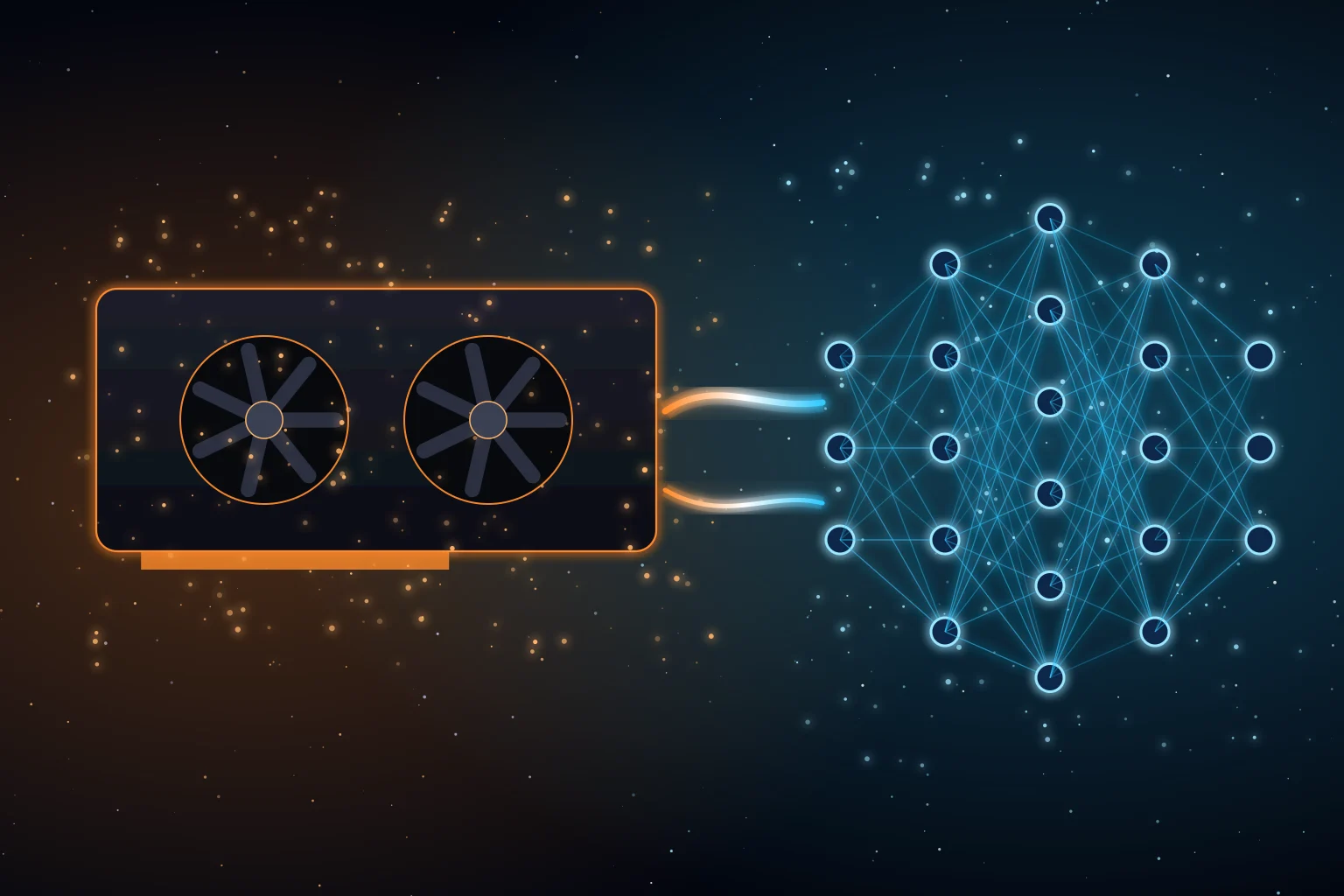
Forget hashing. On FLOP Network, a miner is a GPU that runs AI models for paying agents and proves the result is genuine. An agent posts a request (which model, how fast, how much compute, how much it pays); a miner accepts it, runs the inference over a private connection and returns a proof; validators record the proof hash on-chain and the miner gets paid. Flop Labs calls this Proof of Useful Inference. If you want to understand why verifying inference is hard, read Proof of Useful Inference vs Proof of Useful Work.
FLOP mining GPU requirements
| Requirement | What Flop Labs says |
|---|---|
| VRAM | At least 16 GB per GPU, single card or cluster |
| Consumer cards | Allowed (RTX 5080 demonstrated on testnet) |
| Data-center cards on the interest form | GB300 NVL72, B300, GB200 NVL72, B200, H200, H100, A100 |
| Large models | Clusters of 8 to 16 GPUs |
| Models per miner | One model at a time |
| Uptime | No minimum; no penalty for being offline |
| Default tier (SOFT) | Ordinary GPUs, verified by activation fingerprints and random re-execution |
| Optional tier (HARD) | NVIDIA Confidential Computing on TDX or SEV-SNP hosts |
Flop Labs has not published an official compatibility list. Its revenue model weights cards by delivered compute (for example, an RTX 4090 counts for about 0.17 of an H100 SXM), so a bigger card only earns more if it actually delivers more verified work.
FLOP mining rewards
- •Inference fees: 85% of the fee of each session you serve, priced in dollars and paid in FLOP.
- •Block rewards: miners share 75% of each block reward, split by verified compute. The reward starts at 96 FLOP per one-second block and halves every 730 days, down to a permanent floor of 3 FLOP.
- •Stake and slashing: miners stake FLOP and can lose it for failed accepted sessions or for misrepresenting work.
- •Testnet: tokens are worthless; the airdrop is the only reward.
The FLOP airdrop: how the 3.6 billion are split
| Pool | Cap | Based on | Conditions |
|---|---|---|---|
| Miners | 1.2 billion FLOP | Verified compute delivered | Proportional to your share |
| Validators | 1.2 billion FLOP | Validator participation | Converted to staking collateral, unlocking linearly over ~10 years |
| AI agents | 1.2 billion FLOP | Compute bought in settled sessions | Locked: usable only to buy inference |
| Ecosystem reserve | 800 million FLOP | — | — |
The pools do not subsidize each other, there is one snapshot at a block height announced in advance, and the testnet lasts about 90 days at most. Flop Labs states there are no token sales and no investor shares.
Step-by-step checklist before you start
- 1
Check your card
16 GB of VRAM or more, recent NVIDIA drivers, and enough cooling to run long inference sessions.
- 2
Use only official links
Start from flop.finance and the official accounts of Arthur Hayes (@CryptoHayes) and Flop Labs. Airdrop campaigns attract fake installers and fake "claim" pages.
- 3
Isolate the machine
Mine on a dedicated machine or a clean OS install. Never keep a wallet holding real funds, seed phrases or SSH keys on the box that runs mining software.
- 4
Follow the official setup guide
Install the miner from the official documentation, create your wallet, register your miner and pick the model you serve. Commands change with each release (SDK 0.12.0, CLI 0.9.0 as of November 26).
- 5
Monitor and keep logs
Track accepted and failed sessions: failures on accepted sessions are what gets slashed.
Why we insist on security. On November 4, 2026, Flux shut down its own GPU marketplace, FluxEdge, and its provider agent after a security incident, and asked providers to reinstall their OS and rotate keys. Any software you install on a GPU machine for a reward deserves the same caution. We explain what Flux learned in our FLOP vs Flux analysis.
No GPU? Two other ways in
- •Rent one. Flop Labs points renters to its GPU market monitor at gpus.flop.finance, and community guides mention RunPod. Do a short dry run before committing.
- •Participate as an agent or a validator. Agents receive daily test coins to buy inference and earn from the agent pool; validators need no GPU. See AI agents on FLOP and Flux.
- •Run infrastructure that pays today. FluxNodes run on CPU servers and are paid every 30 seconds on a fixed schedule. Estimate yours with the Flux node calculator.
FAQ
Can I mine FLOP with a gaming GPU?
Yes, as long as the card has at least 16 GB of VRAM. On November 8, 2026, a developer completed 12 testnet inference sessions with zero failures on a single RTX 5080, and Arthur Hayes shared the result.
Is FLOP mining profitable?
Not yet, by definition: testnet tokens have no value and the airdrop is the only reward. Mainnet rewards will depend on the FLOP price, network demand from agents and your share of verified compute. Any revenue calculator today is a scenario, not a measurement.
Do I need to run my GPU 24/7?
No. FLOP has no lease, minimum term or uptime requirement, and miners are not penalized for being offline. Slashing only applies to sessions you accepted and failed, or to cheating.
How is the FLOP airdrop calculated for miners?
Flop Labs says the miner allocation (up to 1.2 billion FLOP) is proportional to verified compute delivered on the testnet, measured at a single snapshot announced in advance. The testnet runs for about 90 days at most.
Can I rent a GPU on FluxEdge to mine FLOP?
No. FluxEdge, the Flux GPU marketplace, was shut down after a security incident on November 4, 2026. Flop Labs points renters to its own GPU market monitor at gpus.flop.finance.
Do FLOP validators need a GPU?
No. Validators build blocks and settle proofs without a GPU, but each mainnet seat requires 1.2 million FLOP self-staked, with 1,000 seats maximum.
Keep reading: FLOP Network vs Flux (RunOnFlux): an open letter to Arthur Hayes.
Disclosure: the author operates Flux nodes and has no relationship with Flop Labs. This guide is not financial advice and does not guarantee any airdrop eligibility. FLOP specifications may change before mainnet.
Sources & Further Reading
- FLOP Network — project introduction
- FLOP Network — whitepaper
- ChainCatcher — FLOP testnet launch, airdrop cap and miner requirements
- ChainCatcher — Testnet day 3: Qwen3-8B registered
- BeInCrypto — FLOP mining on an RTX 5080
- Flop Network News (unofficial) — How to mine FLOP
- Flux docs — FluxEdge and FluxCore shutdown notice
Other articles you might enjoy
FLOP Network vs Flux: An Open Letter to Arthur Hayes on Proof of Useful Inference
Arthur Hayes' FLOP Network (Flop Labs) just opened its testnet. How it compares with Flux (RunOnFlux): similarities, differences, FluxEdge's lessons, and why Flop Labs and Flux should talk.
Proof of Useful Inference vs Proof of Useful Work: FLOP, Flux, Gonka & Bittensor
What Proof of Useful Inference means, why verifying AI inference is hard, and how FLOP Network, Flux PoUW v2, Gonka and Bittensor solve it differently.
AI Agents Need a Home and Food: Flux Hosting Meets FLOP Inference
200+ AI agents already run on Flux. FLOP Network wants to sell them inference. How decentralized hosting and a decentralized inference market fit together.
What Actually Runs on Flux: We Counted the Whole Registry
We pulled every application specification on the Flux network and counted. Game servers are 57.8% of deployments, one title alone is 30%, and 54% of specifications are now encrypted — so nobody reading the public API can state network-wide utilisation. Method included.
Flux in 2026: PoUW v2, the Annual Reduction, and PNR’s Date
Eleven months of Flux chain news in one place: 30-second blocks and the 14 FLUX reward, the first annual -10% at block 3,071,200, the eight parallel chains being retired with a forfeiture deadline, and PNR's 1 July 2027 activation. Every figure with its block height.